
Circular Construction Materials in Europe & Germany
Impact Insights Report


Executive Summary
Circular construction materials are transforming Europe’s built environment, paving the way for sector decarbonization and creating sustainable economic benefits.
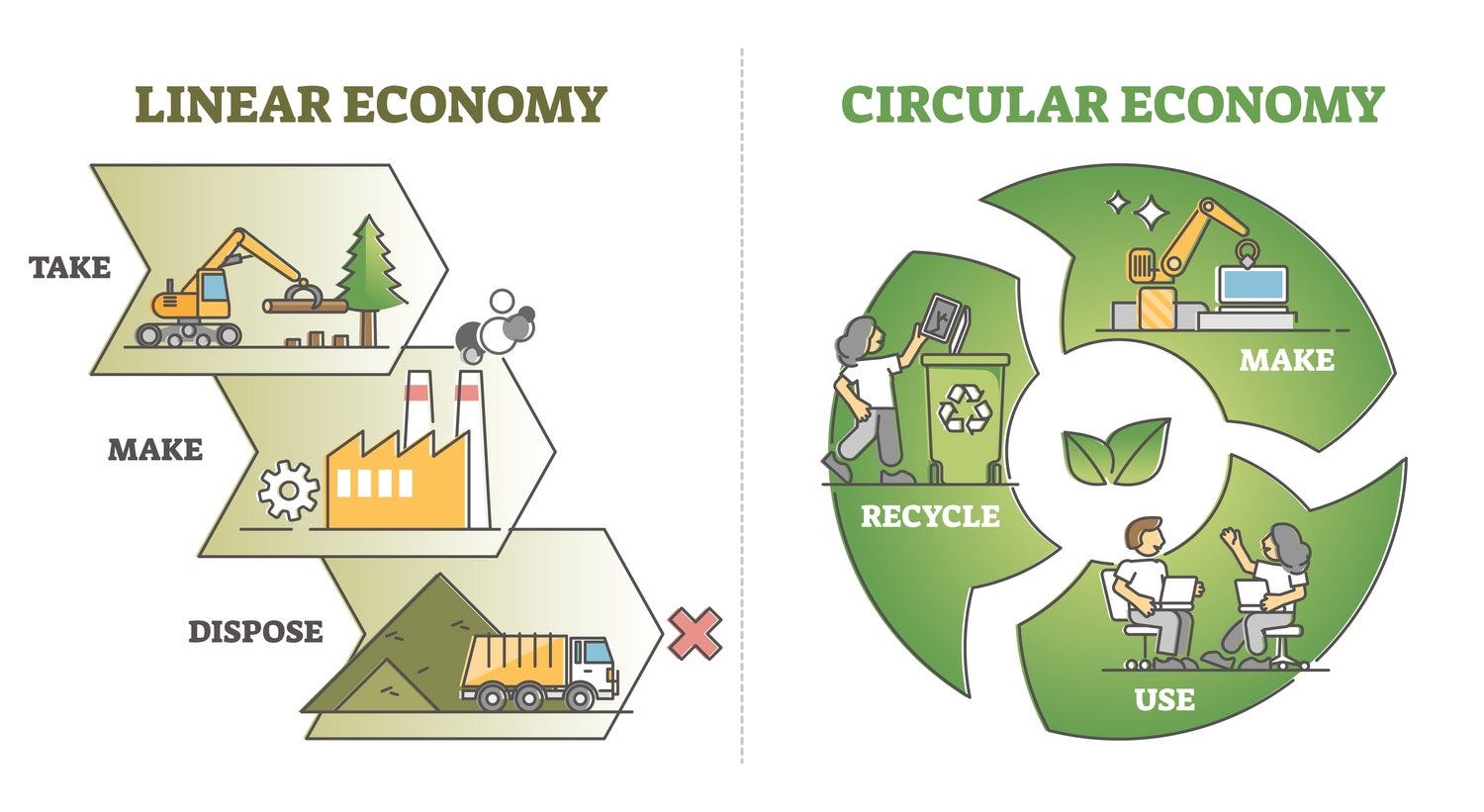
Germany, recognized as Europe's largest construction market, is at the forefront of innovative strategies focused on material recovery and tax-efficient circular practices. This report delves into the economic and regulatory landscape, explores the potential for residual value, and addresses the systemic challenges faced in enhancing circularity.
1. European Market Overview
Key Drivers:
EU Circular Economy Action Plan (2020) mandates 70% construction waste recycling by 2030.
Carbon Border Adjustment Mechanism (CBAM) penalizes high-emission materials like cement and steel.
Rising demand for ESG-compliant buildings from institutional investors.
Material Recovery Performance:
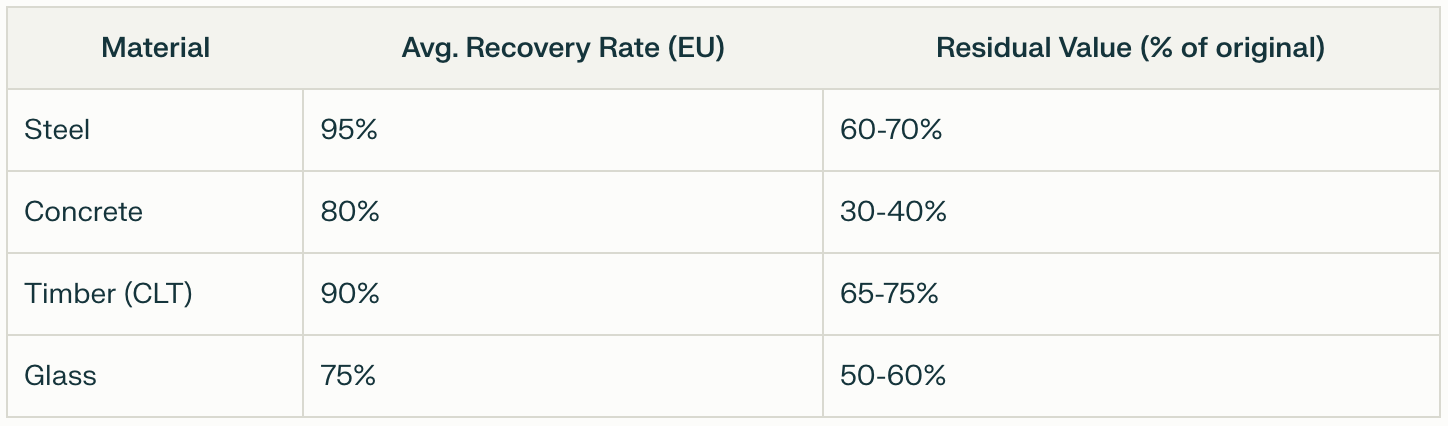
Source: European Construction Industry Federation (2023)
2. German Market Deep Dive
Regulatory Framework:
Circular Economy Act (Kreislaufwirtschaftsgesetz): Requires material passports for buildings >1,000 m².
Tax Depreciation Rules:
Traditional materials: Linear depreciation over 50 years (2% p.a.).
Circular materials: Residual value adjustments permitted if recovery is contractually guaranteed.
